Materials & Technical · June 20, 2026 · 5 min read
Marble vs. Marble-Look Porcelain Tile: An Honest Comparison
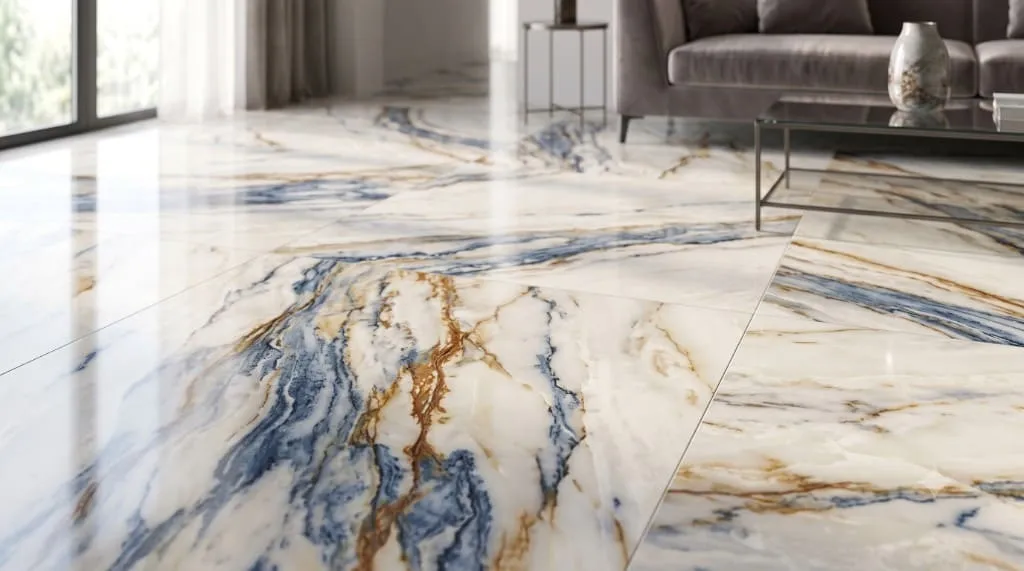
If the floor must be genuinely unique, translucent under light, and you accept annual sealing and careful chemistry, buy marble. If the floor must survive traffic, spills, and decades of cleaning crews while looking like marble from standing height, buy marble-look porcelain — it costs less, asks for nothing, and modern printing has closed most of the visual gap. That is the whole argument; the rest of this article is the evidence, on both sides.
We import porcelain, so read us with that in mind. We have also stood on enough real marble to respect it, and this comparison only helps a buyer if it stays honest.
The 60-second version
- Cost: quality porcelain generally lands below comparable marble on material, and well below it once installation and lifetime care are counted. The gap widens with the rarity of the stone.
- Maintenance: marble is porous and acid-sensitive; it wants sealing on a schedule and gentle chemistry forever. Glazed porcelain absorbs under 0.5% water and shrugs at household cleaners.
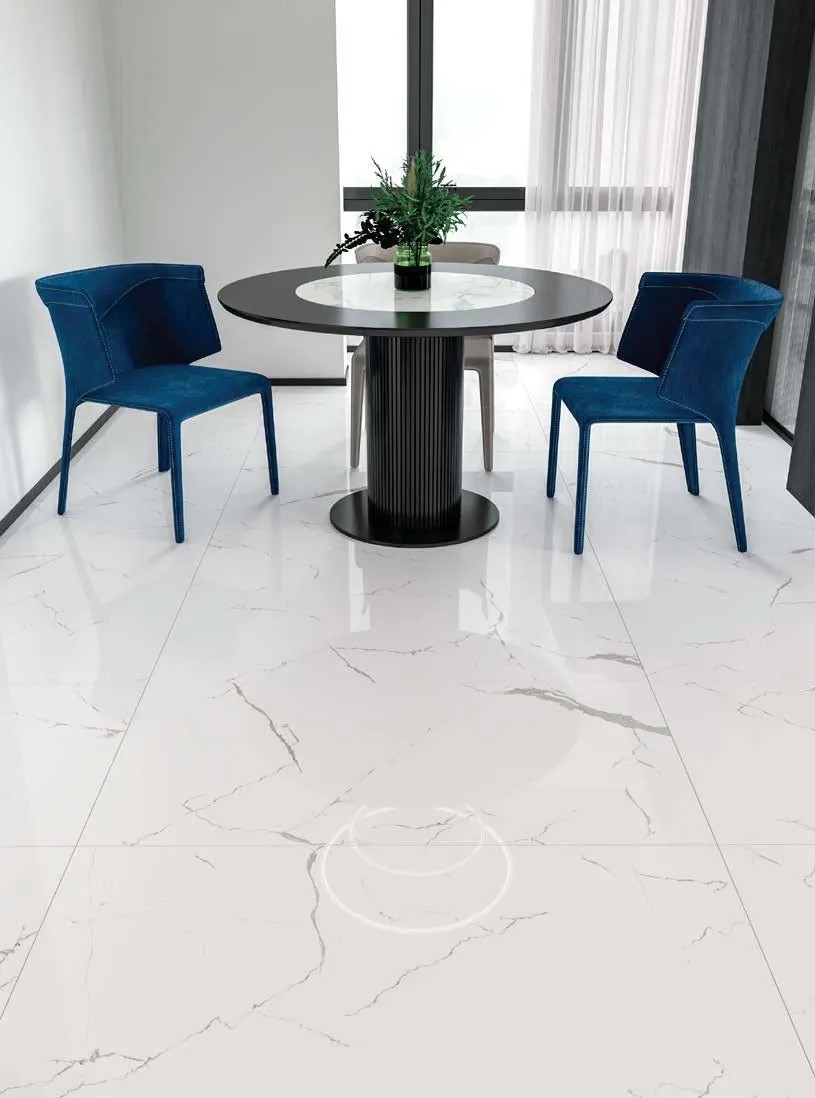
- Looks: at counter height and beyond, current large-format porcelain is convincing. In hand, backlit, or beveled at an edge, stone still reads as stone.
- Durability: porcelain is denser, harder, and engineered for floors. Marble scratches, etches, and chips more readily — which some owners call damage and others call patina.
The cost reality
Marble carries three premiums, not one. The slab or tile itself prices above porcelain — modestly for common Carrara-type material, steeply for rarer stones. Installation adds a second layer: natural stone rewards experienced setters, tighter substrate prep, and immediate sealing, all of which show up on the labor line. The third premium is time: resealing on roughly an annual cycle, pH-neutral cleaners only, and the occasional professional honing when etching accumulates.
Porcelain compresses all three. Material costs less for an equivalent look, installation follows standard large-format practice — flat substrate, correct mortar, lippage control, as with any rectified tile — and the maintenance budget is a mop.
None of this makes marble a bad purchase. It makes marble a purchase with a carrying cost, which is exactly how its owners should think of it.
The "it looks fake" question, taken seriously
Spend ten minutes in a renovation forum and you will meet the skeptic's case: fake marble looks like fake marble — the pattern repeats. A few years ago that was usually true. Whether it is true of the tile in front of you now comes down to one number nobody puts on the showroom card: face count — how many distinct printed variations exist before the design repeats.
Budget lines may carry a handful of faces; current digitally printed production commonly runs dozens. Combined with two other levers, repeats become nearly impossible to spot in a finished room:
- Format: a 60×120 cm (24″×48″) slab shows far fewer pieces per view than a 30×60 cm (12″×24″) grid, so the eye gets fewer chances to find a twin. (Our size guide covers the format ladder.)
- Installation habit: a setter who rotates and shuffles boxes buries the remaining coincidences. A setter who tiles straight out of one box can make a 60-face design look cheap.
So ask suppliers the impolite question directly: how many faces does this design carry? We publish honest photography and ship samples for collections like Onice and Carrara precisely so the judgment happens with the material, not the brochure.
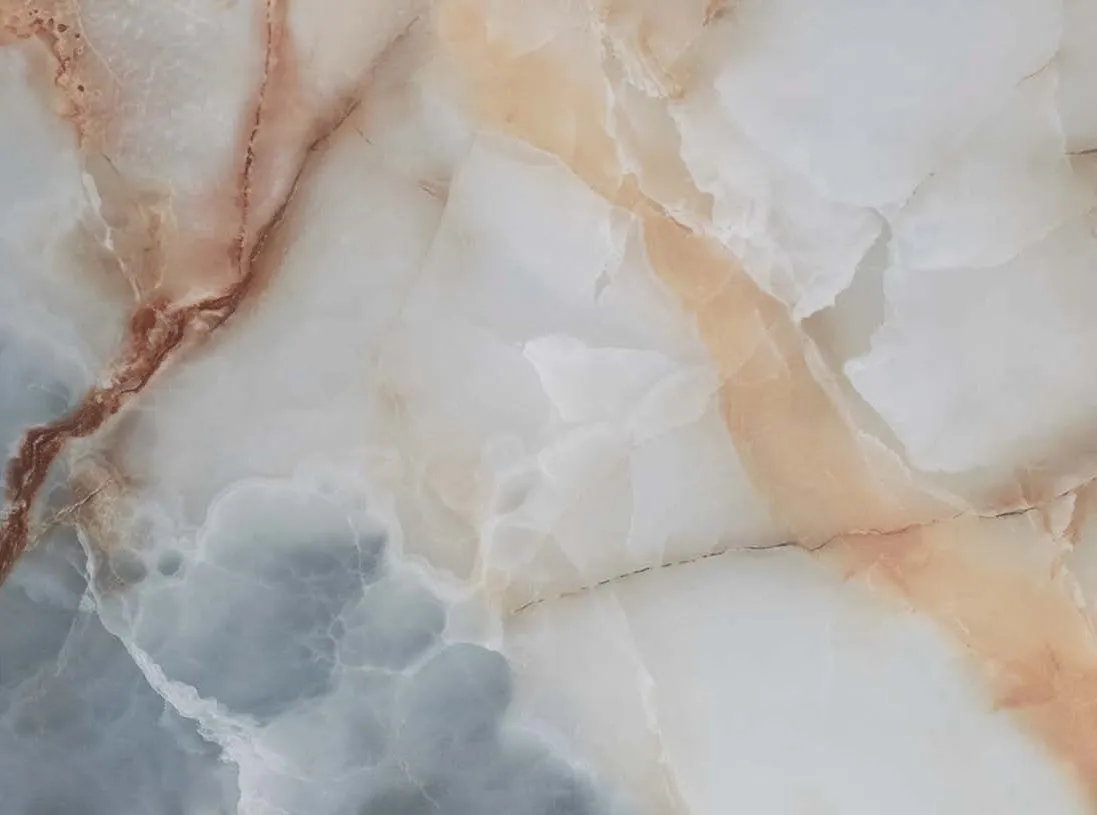
Where porcelain still concedes: depth. Polished marble has a faint translucency — light enters the crystal and returns — that a printed surface does not reproduce. You notice it at grazing angles, on edges, and in hand. From standing height on a floor, you almost never do.
Durability and daily life
Porcelain is fired denser and harder than marble, which is why it earned the floor in commercial buildings. The practical differences:
- Acids: lemon juice, wine, vinegar, and many bathroom cleaners etch marble on contact — a dull ghost mark no wiping removes. Glazed porcelain is chemically indifferent to all of them.
- Stains: marble's porosity lets oil and pigment in, sealed or not, given time. Porcelain at ≤0.5% absorption gives liquids nowhere to go.
- Impact and wear: marble is a soft rock; it scratches under grit and chips at edges. Porcelain resists both, and through-body or full-glaze construction keeps minor damage invisible.
- Wet areas: polished marble underfoot in a shower demands honing or textured finishes for grip; porcelain offers finish-controlled slip ratings by design.
The counterweight is emotional, and real: marble wears its life visibly, and in old buildings that softness — worn thresholds, mellowed polish — is the charm. Porcelain will look in year twenty much as it did in week one. Decide which sentence sounds like a promise and which like a threat; that is your answer.
Where real marble genuinely wins
Bookmatched feature walls cut from a single block. Vanity tops and furniture where the material is touched, not just seen. Historic restoration where authenticity is the specification. Projects where "is it real?" must be answered yes. And any owner for whom the stone's uniqueness — no two slabs alike anywhere on earth — is the point of the budget. In those rooms, specify the stone and enjoy it.
Everywhere the floor is a working surface — kitchens, baths, lobbies, retail, rentals, pool surrounds — the argument tilts hard toward porcelain, which is why the trade has moved there.
A one-minute spec checklist
Choosing marble-look porcelain, confirm five things: rectified edges for tight joints; water absorption ≤0.5% in the test data; face count from the manufacturer; finish matched to the room (polished for walls and dry floors, matt or lappato where grip matters); and a physical sample viewed in your own light, next to your cabinetry, before anything ships. Every GoodzHub product page carries the format, finish, and material data — and samples are a quote request away.
FAQ
- Does marble-look porcelain tile look fake?
- Good production doesn't, at normal viewing distance. The tells are low face count (visible pattern repeats) and lazy installation from a single box. Ask for the face count, favor larger formats, and have the setter shuffle boxes — the three factors that decide realism.
- Is marble-look porcelain cheaper than real marble?
- Usually, on all three lines: material, installation, and lifetime care. The gap is modest against common marbles and wide against rare ones — and porcelain's zero-maintenance profile compounds the difference over years.
- Is porcelain tile colder than marble?
- They feel similar — both are dense mineral surfaces that read cool underfoot and conduct heat well, which also makes both excellent over radiant floor heating.
Featured collections